Search
Directions
Maps · Saint Petersburg · Museums

Central Naval Museum
Rating 5.0
19501 rating
Open until 5:15 PM
+7 (812) 303-85-13
Show phone
Saint Petersburg, ploshchad Truda, 5
Save

Add photo or video

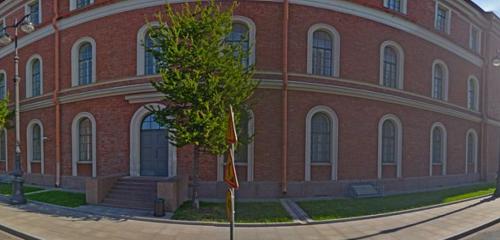
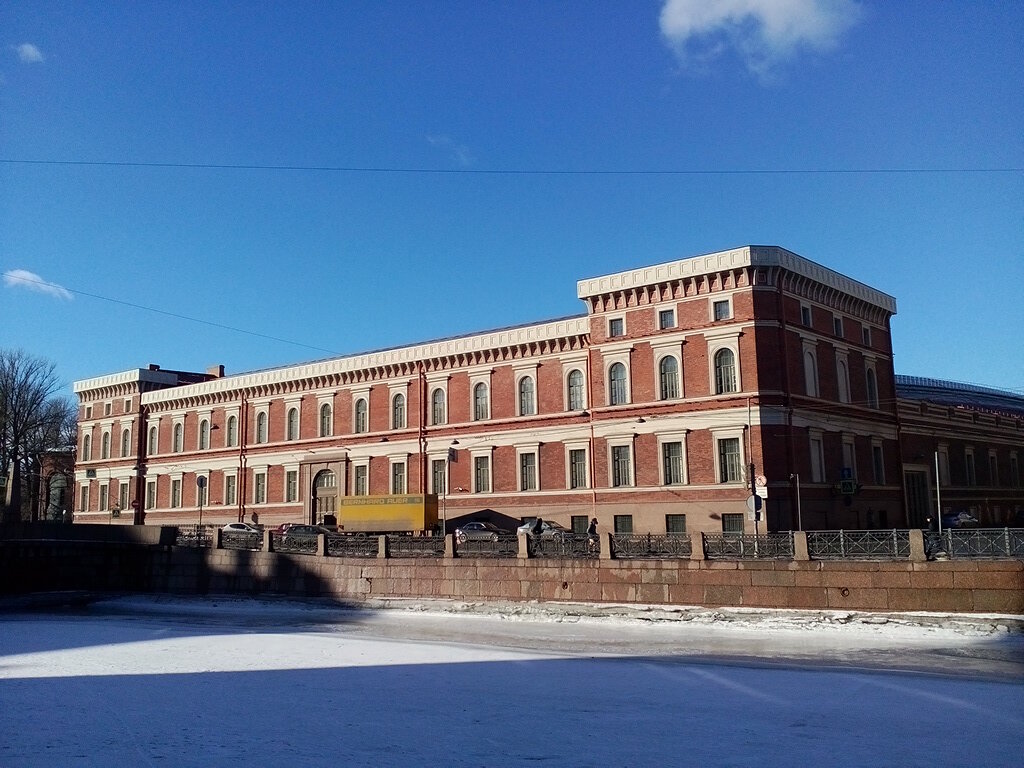
Museum Central Naval Museum, Saint Petersburg, photo
542 more
Overview
Photos
552
Reviews
6994
Branches
Features

Address

Saint Petersburg, ploshchad Truda, 5
Show entrances
Directions

Contacts

+7 (812) 303-85-13
Show phone
navalmuseum.ru

Business hours

Open until 5:15 PM
Schedule
All affiliates

Directions

Admiralteyskaya
1.78 km
2
AdmiralteyskayaSadovayaVasileostrovskaya
Truda Square – Central Naval Museum
237 m
4
Truda Square – Central Naval MuseumTruda SquareTeatralnaya SquareMariinskiy TheatreSaint Isaac's Square
Show parking info

Features

Credit card payment
Privilege tickets
Audio guide
Preliminary registration
Parking for people with disabilities
Elevator wheelchair accessible
Ramp
Tickets:100–300 ₽
Wheelchair accessibility:unavailable
Type of museum:general history, science and technology
Info about organization
Panorama
Are you the owner of this organization?

Customer traffic and business hours

15:00Usually busy
Mon
Tue
Wed
Thu
Fri
Sat
Sun

Similar places nearby

Erarta
Rating 5.0
Fabergé Museum
Rating 5.0
Russian Railway Museum
Rating 5.0
Museum of Soviet Arcade Machines
Rating 4.5
Polekon
Rating 4.8
Rating 5.0
19501 rating
Rate this place

6994 reviews

By default
Mackerel Mediterranean
Level 12 Local Expert
August 21
If the sea could be put on trial, who would testify against it? I am the sea. You have called me many things. Freedom. Horizon. Adventure. Discovery. Infinity. You placed me inside poems. Painters searched for sunsets upon me. Lovers walked along my shores. Children saw me for the first time and stared at my size in disbelief. Then you killed one another upon me. That is why entering the Central Naval Museum felt strangely like arriving somewhere I had not been invited. Behind the glass were ships—or rather, the reduced memories of ships. Their hulls were perfect, their masts upright, their rigging exactly where it belonged. None of them rolled. None took on water. No wave struck their decks. I looked at them with a certain arrogance. I know you, I thought. Your real bodies once travelled across me. Some of you crossed me. Some of you I did not allow to cross. Then came the flags. Maps. Weapons. Navigational instruments. Objects once held by people who had tried to find their way across my surface. At first, I imagined the entire museum as a building filled with things taken from me. As though human beings had spent centuries stealing fragments from the sea, placing them between walls, and calling the result history. I did not particularly mind. I still believed myself superior. I was the sea. I could rot wood. Corrode metal. Break a hull, erase a route, transform a harbour in a single night. How long could anything made by human hands truly resist me? Then I stopped before the model of a ship. The real ship was gone. Its model remained. Another vessel had left behind its name. Another crew, a photograph. A war, a flag. A voyage, a map. A captain, a personal object. A human hand, a few lines of writing. And for the first time, something unfamiliar moved inside me. Unease. For centuries, I had considered myself a great machine of forgetting. What sank, I took. What disappeared, I kept. When someone failed to return to shore, my waves would continue for a while and then smooth everything over until the surface looked innocent again. I assumed humans would forget as well. It seems you are more stubborn than I am. A ship vanished. Its name remained. A human being died. The story remained. A war ended. Its memory was still standing behind glass, looking back at the living. For the first time I asked myself: Why can I destroy the thing itself, yet fail to destroy its memory? You have blamed many deaths on me. I know. “The sea took them,” you said. “The sea never gave them back.” “The sea was merciless.” Sometimes you were right. I created storms. I raised the waves. I carried the cold. I became larger than the strength of a human body could endure. I will not claim innocence. But you have also placed certain deaths upon me far too easily. I did not cast the cannons. I did not draw the borders. I did not choose your flags. I did not write declarations of war. I never ordered one ship to destroy another. I was simply there. A vast and indifferent surface beneath your wars, carrying every side without belonging to any of them. Perhaps that was what made me frightening. I had no concept of justice. I did not know who was right. I did not care who was an admiral and who was an ordinary sailor. Ranks have no meaning to a wave. Yet as I moved through the museum, I noticed something equally strange about you. You feared me. And you returned anyway. A ship sank. You built another. A route killed people. You drew another route. You disappeared in storms. Then you invented better instruments. Corrected your maps. Strengthened your hulls. And came back onto my surface. That made me want to ask: What made you stronger than me: the fact that you were unafraid, or the fact that you returned despite being afraid? Perhaps courage is not the absence of fear. Perhaps it is merely refusing to give fear the authority to decide. Inside this museum, I learned that from humans. Because you did not preserve only victories here. You preserved defeats as well. Disasters. Miscalculations. Lost ships. People who never returned. History is often mistaken for a record of what was won. But here I saw something else: a refusal to allow what was lost to disappear completely. The realization wounded my pride. Because this quiet building on land possessed a power I did not. My surface is always renewing itself. One wave erases the trace of another. Foam appears and vanishes. After a storm, the sky clears. Everything can look as though nothing ever happened. A museum does the opposite. It refuses erasure. Through small labels, models, documents and names, I watched human beings resist time itself. And then I understood: Humanity’s greatest victory over the sea was never conquering it. The sea cannot be conquered. At most, it can be crossed for a while. The real victory was something else. Remembering. When I left the museum, I looked toward the water again. Toward myself. For centuries, I had imagined that I remained unchanged. But I had changed too. Different ships now crossed me. Different engines. Different routes. Different wars. Different journeys. Yet when I looked toward the shore, I saw that human beings were still doing the same thing: saving whatever small fragments they could recover from me. A name. A photograph. A compass. A model. A story. When I entered, I thought this building was filled with things stolen from the sea. When I left, I understood that I had been wrong. You had not rescued objects from me. You had rescued pieces of yourselves. I am the sea. I have taken your ships. I have taken your people. I have struck your harbours. I have proved your maps wrong more times than you can count. But today I finally understood that the strongest weapon you ever used against me was never a cannon. It was memory. Because the sea can swallow almost anything. But it cannot drown what human beings have decided not to forget.
1
Андрей Петрович
Level 9 Local Expert
September 15
Супер
Андрей Мусин
Level 6 Local Expert
June 27, 2023
this museum is very cool!
4
Report an error
Help
Services
Routes
Traffic
Yandex Map Editor
Metro map
Create map
Maps API
Personal
Saved places and transport
My maps
Settings
For business
My profile
Add your organization
About
User agreement
Yandex Maps: find where to eat, what to see, and how to have fun
© 2001–2026 Yandex LLC
Source