

Yandex
ML Prize
Supporting the people who shape the next generation of ML specialists
Every year, the Yandex ML Prize recognizes contributions that move ML education forward. Since 2025, it has been awarded to educators and program leaders.
New models, research, and tech products depend on specialists with a solid grounding in the fundamentals — people who understand how ML works and can take it further.
At Yandex, we believe strong education is where that grounding begins. Educators create courses for fields no textbook covers yet, and program leaders design entire learning paths. Together, they connect fundamental knowledge with today’s science and industry practice.


What the laureates have achieved
- 30×Growth of the online AI master’s programFrom 12 students in the first cohort to 351 within four yearsElena
Kantonistova Elena
Elena
KantonistovaLeads the online master’s program in Artificial Intelligence at HSE University’s Faculty of Computer Science
As enrollment grows, she continues to develop the program itself: refreshing the content, building flexible learning paths, and integrating AI tools into the learning process.
The program covers every stage in the life of an ML solution: collecting and processing data, training models, deploying them to high-traffic services, and maintaining them with MLOps. This training allows graduates to choose different career paths, such as ML engineering, data science, or research.
- Robotics + AIBrought classical robotics together with modern AI methodsStudents learn to use machine learning and computer vision so that robots can sense their surroundings and handle real‑world tasksSergey
Kolyubin Sergey
KolyubinLeads the master’s program in Robotics and Artificial Intelligence at ITMO University
Under his direction, the program has grown beyond classical robotics: mechanics and control now sit alongside machine learning and computer vision.
Sergey also founded an international robotics lab where students continue their research and projects.
- A new approachTo teaching students how to build recommender systemsIt centers on the neural network methods that help services find and rank the right content for each userKirill
Khrylchenko Kirill
KhrylchenkoCreated HSE University’s Neural Recommender Systems course, drawing on his own research and engineering work at Yandex Search, Yandex Ads, Yandex Music, and Kinopoisk
The course covers neural ranking, transformers, graph neural networks, and generative models. Much of it is hands‑on research: students dig into recent papers, reproduce the methods described in them, and learn to form and test their own hypotheses.
- From course to programHow Advanced Data Analysis grew over eight yearsThe program combines MIPT’s mathematical grounding with today’s industry challenges, plenty of hands-on practice, and research projectsNikita
Volkov Nikita
VolkovCreated the Advanced Data Analysis program and has been developing it since 2018
It runs for four semesters and pairs MIPT’s mathematical grounding with today’s industry challenges. Students study statistics, machine learning, deep learning, and applied analytics. They work through the mathematics behind machine learning methods, explore neural network architectures, and learn to check that their conclusions hold up in practice.
- Generative AI for everyoneMade the VisualGenAI course materials available to a broad audienceThe lectures, seminars, and assignments on current image and video generation methods are free for anyone to useDmitry
Baranchuk Dmitry
BaranchukCreated VisualGenAI, a course on generative models in computer vision, and made its materials available to people outside the program
The course keeps pace with generative AI: students study diffusion, multimodal, and 3D models, and their homework puts state-of-the-art techniques from the last few years’ research into practice.
In two years, VisualGenAI grew from a one-week intensive into a full semester-long course. Its audience reaches well beyond Yandex School of Data Analysis students: almost as many people now enroll in it on their own as come from the School.
- 550+Students have completed his ML coursesIn class, students don’t just apply algorithms — they learn the mathematics behind each one and where its limits lieKonstantin
Pchelin Konstantin
PchelinCreated courses on machine learning, semantic search, and neural networks that more than 550 people have completed to date
His students derive each algorithm from the math by hand, probe its limitations, and build it from scratch. That grounding lets them pick up new methods on their own, even ones only just surfacing in research papers and not yet in any textbook.
Konstantin has also written a book on reinforcement learning and its use in large language models, now being translated into Chinese and French.
- Learning by doingA data analysis course shaped by real industry experienceThe theory lives in the assignments themselves: students first work out a solution on their own, then review the results togetherTaisiya
Uskova Taisiya
UskovaCreated a hands-on Data Analysis course at NSU
There are almost no traditional lectures. Instead, students tackle 12 assignments individually, then come together to compare approaches and results in class.
In a single course, students work with tabular, text, and geospatial data while learning statistical methods and classical machine learning models. Presenting results clearly and explaining conclusions gets special attention.
Taisiya built the course from her own experience and from interviews with practicing analysts to bring the learning experience closer to real data work.
- 3000+Learners enrolled in an open course on how LLMs workIt later became the basis for a university course on building LLM‑based solutionsAlbina
Burlova Albina
BurlovaAlbina started with «Inside LLMs: How Does ChatGPT Think?», a free course for a broad audience
More than 3000 learners enrolled.
That experience grew into the Design of Modern LLMs course at HSE University. It takes students from the basics of large language model architecture all the way to building their own solutions: preparing data, fine-tuning models for specific tasks, connecting external data sources, evaluating quality and safety, and carrying their projects through to working prototypes.

3 categories, 3 ways
to change ML education
- Educators
- Program leaders
- Novice educators
Educators
Create courses that help students grow into ML specialists
Experience
At least three years
Track record
Authored or co-authored an ML course at a Russian university or research institute. At least one cohort of graduates required
Prize
₽1 million plus a ₽500,000 Yandex Cloud grant
Bonus
Publish the course in SourceCraft’s open course library
Program leaders
Build a path that carries students from their first courses to projects and research of their own
Experience
At least one program led
Track record
Leadership of an in‑demand ML education program in Russia. At least one cohort of graduates required
Prize
₽1 million plus a ₽500,000 Yandex Cloud grant
Novice educators
New to teaching ML and already shaping approaches of their own
Experience
At least one year
Track record
Authored or co‑authored a course, or taught seminars, at a Russian university or research institute
Prize
₽500,000 plus a ₽500,000 Yandex Cloud grant
Laureates of the Yandex ML Prize

- Konstantin PchelinAIRI, Moscow State UniversityHelps students develop a deep understanding of ML so they can continue learning independently
- Taisiya UskovaNovosibirsk State UniversityBuilds data analysis courses around practical problems
- Albina BurlovaHSE University, AIRITeaches students how to develop large language models
Laureates are chosen by experts
who are advancing ML themselves
Applications are reviewed by researchers, educators, and practitioners from Yandex, the Yandex School of Data Analysis, Moscow Institute of Physics and Technology, and HSE University. Their own experience helps them judge both the substance of a course or program and the difference its author has made to ML education.
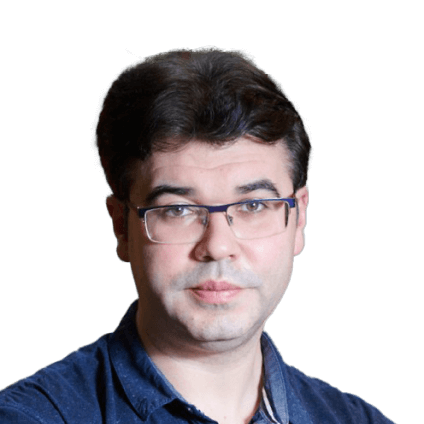 Maxim BabenkoHead of Distributed Computing Technologies, Yandex, head of the Yandex Faculty of Computer Science at HSE
- Andrey SokolovHead of ML RnD Service at Yandex, Researcher at MSU, PhD in mathematics
 Mikhail LevinChief Data Officer, Yandex
 Alexander KrainovDirector of Artificial Intelligence Technologies at Yandex
 Daria KozlovaDirector of Yandex Education
 Alexey TolstikovHead of Yandex School of Data Analysis, Yandex Education
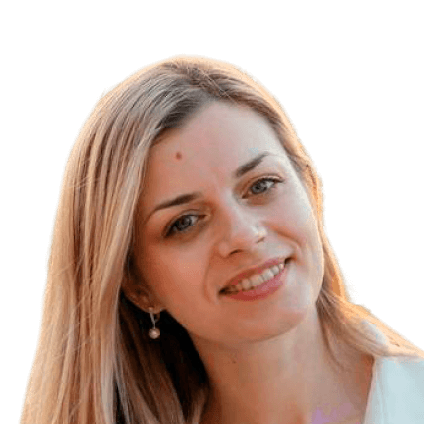 Valentina BronerAcademic Director, Machine Learning–track at the Yandex School of Data Analysis, Yandex Education
- Andrei RaigorodskiiDirector of the Phystech School of Applied Mathematics and Computer Science at MIPT, Academic Director of the AI Institute at MIPT, Head of joint research programs with Yandex, Doctorate of Sciences in Physical and Mathematical Sciences
- Petr ErmakovBrand Director for Machine Learning at Yandex




Hall of Fame
Without these people, ML in Russia would not be what it is. They build research schools, open up new fields, and foster an environment where world-class researchers and engineers can grow.
The Yandex ML Prize Hall of Fame is a way of saying thank you to the people who are changing education, science, and technology and who keep inspiring new generations.

FAQ
- Are the Yandex ML Prize and the Ilya Segalovich Award the same thing?
Yandex ML Prize is the new title of the Ilya Segalovich Award. In 2025, the award may be given to instructors and program leaders who contribute to the development of machine learning.
- What are the award nominations?
Since 2019, nominations have recognized researchers, academic supervisors, and faculty members. Starting in 2026, the award focuses on educators and leaders of educational programs — highlighting their contributions to the development of machine learning.
- I’m the Yandex ML Prize winner in the period of 2019–2025. Can I apply in 2026?
Yes, you can re-apply for the prize if you meet the nomination criteria.
- Can I apply in multiple categories?
No, you can only apply for one nomination except you nominate other candidates for the prize.
- The candidate works with universities and research institutes in other countries. Can I nominate them?
Yes. Working with foreign universities and research institutes is not an obstacle for receiving the award. However, the competition primarily considers the candidate’s work in Russia.
- How do you apply in the Educators, Program leaders, and Novice educators categories?
Applications can be submitted by educators and program leaders. To apply, you’ll need feedback from at least three students who have completed your course or program. You can include student contacts in your application or ask them to submit feedback through the form on the website.
- I’d like to apply for the research track. Can I do this?
This year, we’re not awarding prizes in the First Publication, Researchers, Young Research Supervisors, or Academic Supervisors nominations. However, if your work includes both research and teaching, we encourage you to apply.